
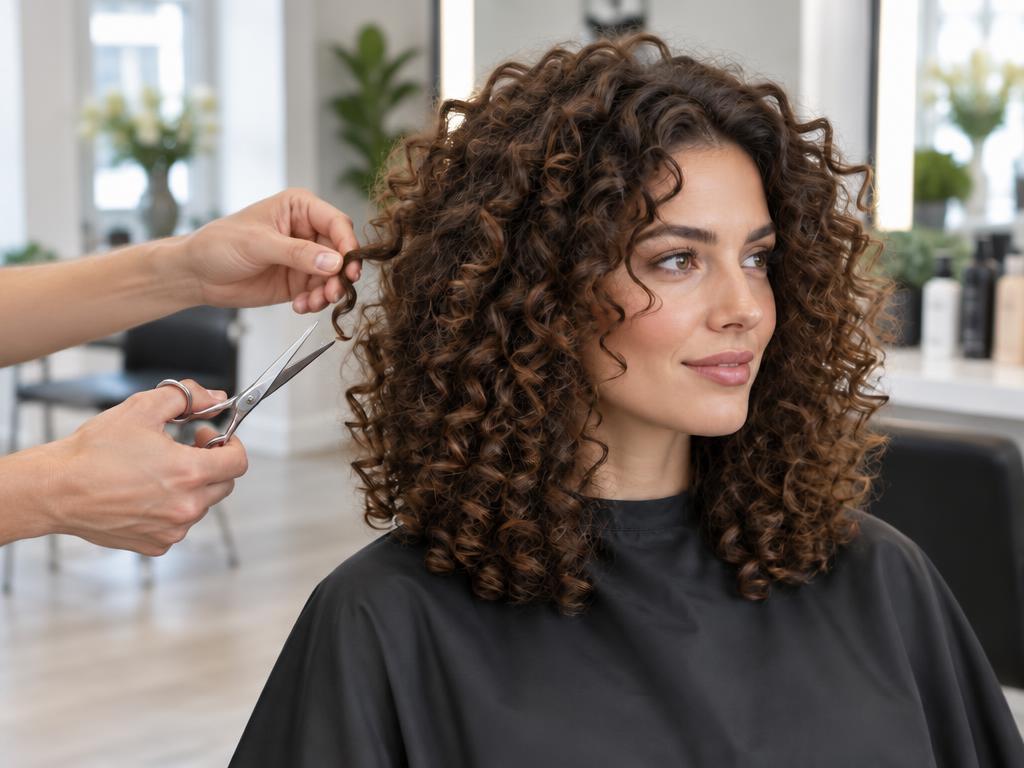
If you are wondering whether a dry cut is right for your curls, this guide is for you. It explains what dry cutting involves and which questions to ask before choosing an approach with your stylist.
Dry cutting means shaping hair while it is dry rather than cutting only when wet. For curls, the practical reason is visibility: the stylist can observe how the client’s hair currently falls, where curl groups sit and how much visible shrinkage occurs. That can help inform shape and length decisions, especially when the client normally wears curls natural. It does not mean every curl must be cut individually, and it cannot predict exactly how hair will behave after every wash.
Wet cutting has advantages too. Wet hair can be easier to section and control, and certain shapes or techniques may be easier to execute consistently when strands are stretched. The best approach depends on the hair, desired finish and stylist’s training. A skilled consultation should explain the method and invite the client to raise concerns about length, fringe, layers or past uneven results.
Ask whether the stylist wants hair clean, dry and in its usual curl formation; whether product buildup or stretched styling changes the plan; and whether the appointment includes a final dry refinement. Avoid assuming that a salon’s “dry cut” label alone proves curl expertise. Ask to see examples on similar textures and ask how they account for shrinkage and different curl patterns across one head.
For a first visit, arrive with realistic inspiration images and describe how you actually style your hair at home. If you have scalp symptoms, sudden shedding or significant breakage, seek clinical advice rather than expecting a haircut to address a medical cause. Dermatologists recommend gentle handling and conditioning for curly hair, which may be more prone to dryness and breakage. AAD curly hair guidance