
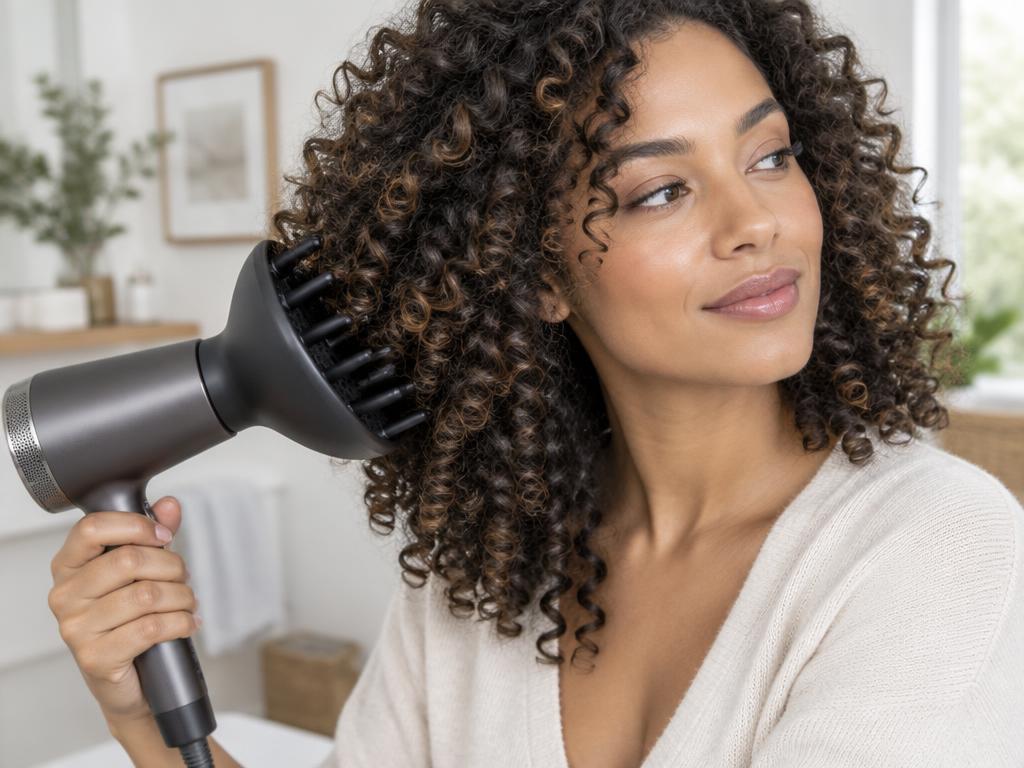
If you regularly diffuse or straighten your curls, or have noticed dryness and breakage after heat styling, this guide can help. It explains ways to reduce further stress and what a salon consultation can—and cannot—address.
Heat can weaken hair and contribute to dryness, brittleness and breakage; repeated high-temperature styling may also change how curls behave. No salon treatment can guarantee a permanent repair of damaged hair. A haircut may remove some visibly compromised length, while gentle handling and less heat can help limit further stress as new hair grows.
Reduce exposure by air-drying when feasible, partially air-drying before using a dryer, and choosing a lower setting that still achieves the style. Use a diffuser thoughtfully rather than holding intense heat in one spot, and avoid repeated flat-iron passes. Dermatologists advise using flat irons on dry hair at low or medium heat and reducing blow-drying frequency; all hair types can be damaged by excessive heat. AAD styling guidance
If you straighten occasionally, start with clean, dry hair and follow the tool’s instructions. A heat-protectant product may be part of a routine, but it is not a shield against unlimited heat or a guarantee against damage. Be cautious with tight styles that add tension, especially if hair is already fragile. If texture changes suddenly, breakage is widespread or the scalp is uncomfortable, consider speaking to a dermatologist or GP to identify other causes.
At your next cut consultation, describe how often you use heat and what you want your hair to do naturally. A stylist can discuss shape and styling choices, but cannot diagnose scalp or hair-loss conditions. Existing service details are available on the curls, coils and waves page.